+ applicable tax
Your Clark or Tug baggage tractor's brakes are failing — pedal going to the floor, spongy feel, fluid leaking from the master cylinder, or you've lost braking entirely. On a baggage tractor operating on an active airport ramp, around aircraft, fuel trucks, belt loaders, and ground crew, brakes are safety-critical. The tug dealer wants $189.98 for a replacement master cylinder. That's nearly $200 for a standard cast iron brake component.
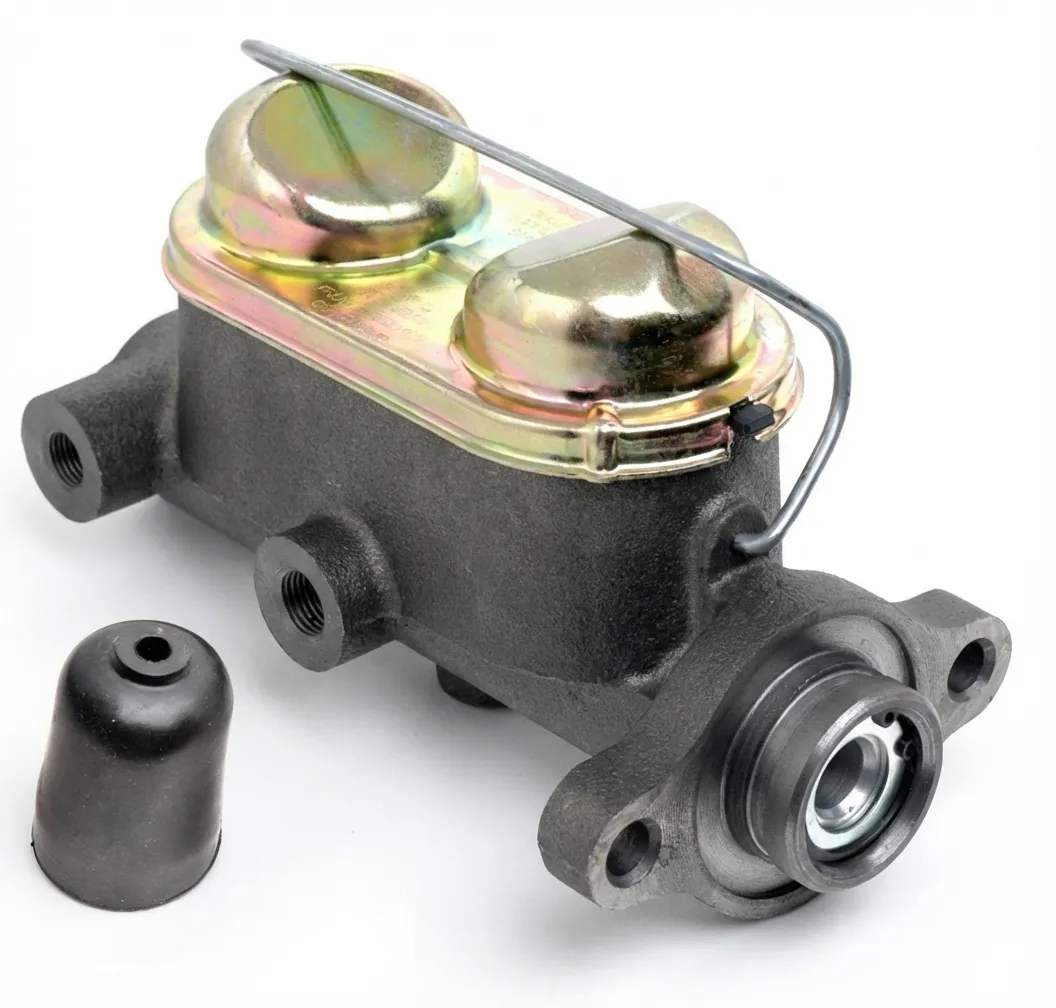
We sell the direct replacement for $149.00 — saving you over $40 vs the competition. This is the same specification master cylinder: 1-1/8" bore, cast iron body, manual brake configuration with the correct deep piston pocket for the pushrod, and standard inverted flare port threads (1/2"-20 and 9/16"-18). It bolts directly into the firewall mounting location and connects to the existing brake lines with no modifications. Replaces Clark/Tug part numbers 890870 and 2226085.
Clark and Tug baggage tractors use manual (non-power assisted) drum brakes — there is no vacuum booster. This master cylinder is specifically designed for manual brake systems with a deep piston pocket that properly engages the brake pedal pushrod. Do NOT substitute a power-brake master cylinder — power brake versions have a shallow piston pocket and the pushrod will not seat correctly, resulting in a pedal that falls through or has no braking force.
Baggage tractors operate in one of the most demanding brake environments in ground support: constant stop-and-go on smooth concrete and asphalt, towing heavy baggage carts in all weather, operating in rain, snow, de-icing fluid, and jet exhaust. The master cylinder is subjected to thousands of brake applications per shift. When it fails, the tug is grounded:
A grounded baggage tractor backed up during a bank of flights costs the airline thousands in delays. This is an urgent, safety-critical replacement item with zero tolerance for downtime.
This is the same specification brake master cylinder used in Clark and Tug baggage tractors. Cast iron body for durability, 1-1/8" bore for the correct brake line pressure, dual bowl (tandem) design for independent front/rear circuit separation, and the correct deep piston pocket for manual brake pushrod engagement. Remove the old master cylinder, bench bleed the new one, bolt it on, connect the lines, bleed the system, and the tug is back on the ramp.
Before ordering, verify the casting number on your existing master cylinder:
The casting number is typically raised lettering on the side of the master cylinder body. If your existing master cylinder shows either of these numbers, this is the direct replacement.
The 890870 brake master cylinder fits Clark and Tug ground support equipment with manual drum brake systems:
⚠️ Verify Clark/Tug part number 890870 or casting number 29910 / 2225647 on your existing master cylinder before ordering. Contact us with your equipment model and serial number if you're unsure.
How do I know if I have manual or power brakes?
Clark and Tug CT30/CTA40/CT50 baggage tractors use manual brakes — there is no vacuum booster. Look at the firewall behind the brake pedal. If the pushrod from the brake pedal connects directly to the back of the master cylinder with no large round canister (booster) in between, you have manual brakes. This is the standard configuration for these tugs.
What is the "deep piston pocket" and why does it matter?
Manual brake master cylinders have a deeper hole in the primary piston to accept the longer pushrod stroke from the brake pedal (since there is no booster multiplying the force). A power brake master cylinder has a shallow pocket because the booster provides the additional force. Using a power brake master cylinder on a manual brake system will result in improper pushrod engagement — the pedal will feel wrong and braking will be compromised.
Do I need to bleed the brakes after replacement?
Yes — always. Bench bleed the new master cylinder first, then bleed the entire brake system at all four wheel cylinders after installation. Any air trapped in the system will cause a spongy pedal and reduced braking performance.
What type of brake fluid should I use?
DOT 3 brake fluid. Do NOT use DOT 5 (silicone) unless the entire system was designed for it. DOT 3 and DOT 5 are not compatible — mixing them will destroy every rubber seal in the brake system.
How do I verify the casting number?
Look at the side of your existing master cylinder body. The casting number (29910 or 2225647) is typically raised lettering cast into the iron. It may be partially covered by dirt or paint — clean the surface to read it. If you see either number, this is the correct replacement.
Direct replacement 1-1/8" bore brake master cylinder for Clark and Tug baggage tractors with manual drum brakes. Cast iron body, deep piston pocket for manual brake pushrod. Fits CT30, CTA40, CT50, and MA Series. Replaces Clark 890870 and 2226085. Save over $40 vs the competition.
